
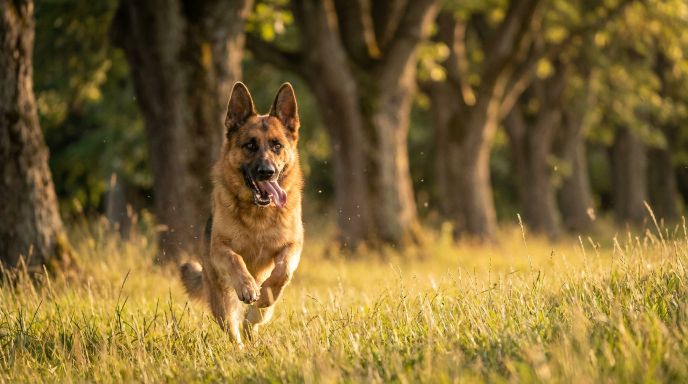
Picture this: You’re at your favorite park, and your German Shepherd is running freely through the grass, ears back, tongue out, pure joy on their face. You call their name once, and they immediately turn and sprint back to you, sitting at your feet with that proud look that says, “Did I do good?”
That’s the dream, right?
But here’s the reality for most German Shepherd owners: the thought of letting their dog off-leash is terrifying. What if they chase a squirrel into traffic? What if they don’t come back? What if they get into a fight with another dog?
These fears are completely valid. German Shepherds are intelligent, powerful, and independent thinkers. They have strong prey drives, protective instincts, and during adolescence, they can seem like they’ve forgotten every command you ever taught them.
But here’s the good news: with the right approach, patience, and consistent training, your German Shepherd can earn the privilege of off-leash freedom. This isn’t about letting your dog run wild—it’s about building such strong communication and trust that your GSD chooses to stay with you even when they’re free to leave.
In this guide, we’ll walk through everything you need to know about off-leash training specifically for German Shepherds. We’ll cover the prerequisites you absolutely must have in place, a proven 5-stage training method, breed-specific challenges, and safety guidelines that will keep your dog safe while they enjoy their freedom.
Important note: Off-leash training is an advanced skill that takes 6-12 months to develop reliably. This isn’t a quick fix—it’s a long-term investment in your relationship with your German Shepherd. But the reward of watching your confident, well-trained GSD explore the world while staying connected to you? That’s priceless.
Let’s get started.
- Why German Shepherds Need Special Off-Leash Training
- Before You Start: Essential Prerequisites
- The 5-Stage Off-Leash Training Method
- German Shepherd-Specific Off-Leash Challenges
- Common Mistakes That Ruin Off-Leash Training
- When to Seek Professional Help
- Your 90-Day Off-Leash Training Action Plan
- Frequently Asked Questions
- Conclusion
Why German Shepherds Need Special Off-Leash Training
You can’t train a German Shepherd off-leash the same way you’d train a Golden Retriever or a Labrador. Different breeds have different drives, instincts, and temperaments that directly impact how they respond when given freedom.
Breed-Specific Challenges
High Prey Drive: German Shepherds were originally bred as herding dogs, and that heritage means they have a strong instinct to chase moving objects. Squirrels, rabbits, bikes, joggers, even blowing leaves can trigger that chase response. When your GSD sees prey, their brain floods with adrenaline, and suddenly your voice becomes background noise. This is why recall training must be stronger than their prey drive—and that takes serious work.
Herding Instincts: Ever noticed your German Shepherd trying to “herd” children, other dogs, or even you? That’s their herding instinct kicking in. Off-leash, this can manifest as nipping at heels, circling people or animals, or trying to control movement. While it’s not aggressive, it can be misunderstood by others and needs to be managed.
Protective Nature: German Shepherds are naturally protective of their family. Off-leash, this can become problematic if your dog perceives a stranger or another dog as a threat. They may position themselves between you and the “threat” or become reactive. This is why socialization and impulse control are critical before off-leash work.
Adolescent Independence: Between 6-18 months, German Shepherds go through adolescence—the training equivalent of the terrible twos. During this phase, they test boundaries, ignore commands they previously knew, and act like they’ve never met you before. Off-leash training during adolescence requires extra patience and often means returning to earlier training stages.
Why Off-Leash Training Matters
German Shepherds are working dogs. They need mental stimulation and physical exercise that goes beyond a standard leash walk around the block. Off-leash time allows them to:
- Burn energy efficiently: A 30-minute off-leash run equals a 2-hour leash walk in terms of physical and mental exercise.
- Strengthen your bond: When your dog chooses to come back to you despite distractions, it deepens trust.
- Provide emergency safety: A solid recall can literally save your dog’s life if they slip their collar, bolt through an open door, or encounter danger.
- Give them the freedom they crave: German Shepherds are active, intelligent dogs. Off-leash time lets them explore, sniff, and just be a dog.
But—and this is crucial—off-leash freedom is earned, not automatic. It’s the result of consistent training, realistic expectations, and prioritizing safety above convenience.
Before You Start: Essential Prerequisites
Here’s the truth that many dog owners don’t want to hear: if your German Shepherd doesn’t have solid on-leash obedience, off-leash training will fail. Period.
Off-leash work is advanced training. It’s like trying to teach calculus to someone who hasn’t learned basic math. You need a strong foundation first.
On-Leash Obedience Foundation (MUST HAVE)
Before you even think about dropping the leash, your German Shepherd must reliably respond to these commands in low-distraction environments:
✅ “Sit” – Your dog should sit on command every single time, even with mild distractions.
✅ “Stay” – Your dog should hold position for at least 30 seconds while you walk 20 feet away.
✅ “Come” – This is your most important command. Your dog should come when called 8 out of 10 times (minimum) indoors and in your backyard.
✅ “Heel” or loose-leash walking – Your dog should walk beside you without pulling for at least 30 minutes.
If your German Shepherd is still pulling you down the street on walks, you’re not ready for off-leash training. Focus on leash manners first.
Success benchmark: Your dog should have at least an 80% success rate with these commands before moving to off-leash work. If you call “Come” 10 times in your backyard, your dog should respond correctly at least 8 times.
Age & Readiness Checklist
Off-leash training looks different depending on your dog’s age:
Puppies (8-16 weeks):
Focus on recall games in confined, safe spaces like your backyard or hallway. Keep sessions short (2-3 minutes) and fun. At this age, you’re building positive associations with coming when called—not demanding perfect obedience.
Adolescents (6-18 months):
This is the toughest phase. Your German Shepherd will test boundaries, act distracted, and seem to “forget” commands. Expect setbacks. Use a long line for all outdoor training during this phase, and don’t rush. Many owners make the mistake of going off-leash too early during adolescence, and it destroys months of progress.
Adults (18 months+):
If you’re starting off-leash training with an adult dog that has no prior training, be patient. Adult dogs can absolutely learn, but they may have established bad habits (ignoring you, chasing prey) that take longer to undo.
Equipment You’ll Need
15-30 foot long line (NOT a retractable leash):
A long line gives your dog freedom to explore while keeping you in control. Retractable leashes don’t work for off-leash training because they train your dog to pull. Get a lightweight, durable long line—30 feet is ideal for most training.
Well-fitted harness:
Attach the long line to a harness, not a collar. If your dog bolts and hits the end of the line, a harness distributes the force safely across their chest instead of jerking their neck.
High-value treats:
Forget regular kibble. Off-leash training requires rewards that are more exciting than the environment. Use small pieces of cooked chicken, cheese, hot dogs, or freeze-dried liver. Your dog should be willing to leave a squirrel for these treats.
Whistle (optional):
Some trainers use a whistle for emergency recall because it’s a unique, consistent sound that carries far. If you go this route, only use the whistle when you have your dog’s absolute favorite reward ready.
Where to buy: For detailed reviews of long lines, harnesses, and GPS collars, visit GSDGearLab.com.
Safety & Legal Considerations
Before you start off-leash training, you need to understand the risks and legal responsibilities:
Check local leash laws: Many parks, trails, and public spaces legally require dogs to be leashed at all times. Off-leash training in these areas can result in fines—even if your dog is perfectly behaved.
Never train near roads or unfenced areas: Even the best-trained German Shepherd can make a mistake. One moment of distraction near a road can be fatal. Always train in safely enclosed or very remote areas.
You are liable for your dog’s actions: If your off-leash German Shepherd bites another dog, knocks over a child, or causes an accident, you are legally and financially responsible. Off-leash freedom comes with serious responsibility.
Safety first, always: If you’re not 100% confident in your dog’s recall, keep them on a long line. Freedom isn’t worth a tragedy.
The 5-Stage Off-Leash Training Method
This method is designed specifically for German Shepherds. It’s progressive, meaning each stage builds on the previous one. Don’t skip ahead—rushing this process is the number one reason off-leash training fails.
Stage 1: Recall Foundations in a Confined Space (Weeks 1-2)
Where to train: Fenced backyard, indoor hallway, garage, or any safe, enclosed space.
Goal: Your German Shepherd should come when called 9 out of 10 times in a distraction-free environment.
How to do it:
- Start close: Stand 5 feet away from your dog. Say their name in an excited, happy voice, followed by “Come!” (Or use whatever recall word you prefer—”Here” and “Come” are most common.)
- Reward immediately: The second your dog reaches you, give them a high-value treat and lots of praise. Make coming to you the best thing ever.
- Gradually increase distance: Once your dog has 90% success at 5 feet, move to 10 feet, then 15 feet, then 20 feet.
- Add mild distractions: Place a toy on the ground. Have a family member walk by. Call your dog away from their food bowl (after they’ve been eating for a few seconds—don’t be mean about it).
- Practice 3-5 times daily: Keep sessions short—2-3 minutes max. You want your dog excited to train, not bored.
Common mistakes to avoid:
❌ Using “Come” for negative things: Never call your dog to you and then do something they dislike (trim nails, give medicine, end playtime). This teaches them that “Come” means something bad is about to happen.
❌ Chasing your dog if they don’t come: This turns recall into a fun game of keep-away. If your dog doesn’t come, walk calmly toward them and guide them to you, then reward.
❌ Repeating the command: Say “Come” once. If you repeat it multiple times, you’re teaching your dog that they don’t have to respond the first time.
Stage 2: Long-Line Training in Low-Distraction Areas (Weeks 3-6)
Where to train: Quiet park, empty field, or schoolyard during off-peak hours (early morning is ideal).
Equipment: 15-30 foot long line attached to a harness.
Goal: Your dog should reliably come when called even with mild distractions like birds, smells, and open space.
How to do it:
- Let your dog explore: Attach the long line and let your dog sniff, explore, and just be a dog. Don’t hold the line—let it drag behind them (but stay close enough to step on it if needed).
- Call “Come” every 2-3 minutes: When your dog is mildly distracted (sniffing a tree, watching a bird), call them back. If they come, reward heavily. If they ignore you, gently pick up the long line and reel them in (don’t yank). Reward when they reach you, even though you had to help them.
- Practice direction changes: Suddenly walk in the opposite direction without saying anything. When your dog notices and catches up, reward them. This teaches your dog to keep an eye on you.
- Introduce the “Check-In” game: Any time your dog looks at you on their own (without you calling), immediately reward them. This builds a habit of voluntarily checking in with you.
Troubleshooting:
Problem: My dog ignores me completely.
Solution: Your treats aren’t exciting enough. Upgrade to something irresistible—for many German Shepherds, tiny pieces of cooked chicken or cheese work wonders. Also, make sure your dog is hungry during training (don’t train right after a meal).
Problem: My dog runs to the end of the long line and pulls.
Solution: Shorten the line to 10-15 feet until their recall improves. Also, practice the “Check-In” game more frequently—you want your dog to voluntarily stay closer to you.
Stage 3: Moderate Distractions with Long Line (Weeks 7-10)
Where to train: Busier parks, trails with occasional dogs and people, or anywhere with moderate distractions.
Goal: Your dog’s recall should work even when there are tempting distractions present.
How to do it:
- Practice recall near distractions: When your German Shepherd sees another dog 50+ feet away, call them back to you. Reward heavily if they respond. If they ignore you, reel in the long line calmly.
- Increase difficulty gradually: Practice recall near playgrounds, joggers, cyclists. Start at a distance (50+ feet from the distraction) and slowly decrease the distance over weeks as your dog’s reliability improves.
- Use an emergency recall cue: This is an optional advanced technique. Choose a unique sound (whistle, clicker pattern, or a word you’ve never used before like “TREAT!”). Use this sound ONLY when you have your dog’s absolute favorite reward ready. Practice this once a week. The goal is to create a nuclear option—a recall that works even in emergencies because your dog associates it with the best reward ever.
- Never call your dog away from something fun without rewarding: If you call your dog away from playing with another dog or exploring an interesting smell, you need to make coming to you MORE rewarding than what they’re leaving. Otherwise, you teach them that “Come” means the end of fun.
Age-specific tip for adolescents (6-18 months):
This is where adolescent German Shepherds often regress. Commands they knew perfectly at 5 months suddenly don’t work at 9 months. This is normal brain development—not defiance. Double down on long-line work. Do not go off-leash during adolescence unless you’re in a fully fenced area. Many owners rush this stage and lose months of progress.
Stage 4: Off-Leash in Controlled Environments (Weeks 11-16)
Where to train: Fenced dog park during off-peak hours, enclosed tennis court, fenced sports field, or any large enclosed space.
Goal: Your first real off-leash experiences, with the safety net of a fence.
How to do it:
- Drop the long line, but leave it attached: This is a critical transition step. The long line is still attached to your dog’s harness, but you’re not holding it. If your dog fails a recall, you can step on the line and prevent them from leaving the area.
- Practice all commands: Don’t just practice recall. Practice Sit, Stay, Heel, and Down commands off-leash. This reinforces that “off-leash” doesn’t mean “rules don’t apply.”
- Use a “Release” word: Teach your dog a release cue like “Okay!” or “Free!” Use this to tell them when they’re allowed to go explore after completing a command. This creates a clear structure: obey command → release → freedom → recall → obey command → release → repeat.
- Call your dog back every 3-5 minutes: Practice frequent check-ins. Reward them with a treat and praise, then release them again with your release word. This teaches your dog that coming back doesn’t mean the fun is over.
- If recall fails twice, reattach the line: If your dog ignores you twice in one session, that’s a sign you moved too fast. Pick up the long line and practice Stage 3 for another week before trying again.
Common mistakes:
❌ Removing the long line too soon: This is the most common failure point. Most dogs need 3-4 weeks of “dragging line” work before the line can be removed entirely.
❌ Only calling your dog when it’s time to leave: If the only time you use recall is to end the fun and go home, your dog will start avoiding you. Practice frequent recalls with rewards and releases throughout the session.
Stage 5: Real-World Off-Leash Reliability (Months 5-12)
Where to train: Hiking trails, open fields, beaches (where legally allowed).
Goal: Confident off-leash control in any environment.
How to do it:
- Continue rewarding check-ins: Never stop reinforcing good behavior. Even after a year of off-leash training, randomly reward your dog when they check in with you.
- Practice “emergency recall” monthly: Once a month, use your emergency recall cue (whistle or special word) and reward with something incredible (entire hot dog, full play session with their favorite toy). This keeps the emergency recall strong.
- Always carry treats: Don’t fall into the trap of thinking, “My dog is trained now; I don’t need treats anymore.” Your German Shepherd will always need reinforcement for off-leash behavior. The environment is too rewarding without it.
- Use a GPS collar for safety: In unfamiliar areas, consider a GPS collar like a Fi or Garmin. This provides peace of mind and lets you track your dog if they do wander too far.
Safety rules for real-world off-leash:
🚫 Never go off-leash near roads: Even with perfect training, one moment of prey drive can end in tragedy.
🚫 Avoid off-leash during hunting season: In rural areas, hunters may mistake your German Shepherd for wildlife.
🚫 Never go off-leash near livestock: German Shepherds chasing livestock can result in your dog being shot legally in many states.
🚫 Respect leash laws: Freedom isn’t worth a fine—or worse, your dog being impounded.
German Shepherd-Specific Off-Leash Challenges
Even with perfect training, German Shepherds have breed-specific traits that create unique off-leash challenges. Here’s how to handle them:
High Prey Drive
German Shepherds were bred to chase and herd. When a squirrel bolts, your dog’s brain floods with adrenaline, and suddenly you don’t exist.
Solution:
Practice recall around low-intensity prey first. Start with birds at a distance (50+ feet), then gradually decrease the distance over months. Never practice recall near high-intensity prey (rabbits, squirrels darting) until your dog has months of solid recall history. Use your emergency recall cue (whistle) for high-distraction scenarios, and reward with something extremely high-value (full piece of chicken, not just a tiny treat).
Adolescent Independence (6-18 Months)
This is the phase where German Shepherds act like they’ve never met you before. They ignore commands, test boundaries, and seem to lose all their training.
Solution:
Return to long-line training. Seriously. Even if your dog was doing great off-leash at 10 months, if they hit adolescence and start ignoring you, put the long line back on. Increase reward value—use better treats. Shorten training sessions to keep them engaged (2-3 minutes, multiple times a day). Most importantly, be patient. Adolescence ends, but rushing through it will create bad habits that last a lifetime.
Protective Instincts
German Shepherds are naturally protective. Off-leash, this can mean your dog won’t return if they perceive a “threat”—a stranger approaching, another dog getting too close, or even someone raising their voice.
Solution:
Socialize extensively before off-leash work. Practice recall near neutral dogs and people (start at a distance, gradually decrease). Work with a professional trainer if your German Shepherd shows signs of aggression or intense reactivity.
If your dog has a history of aggression, off-leash work may not be appropriate for them. Some dogs are safer and happier on a long line permanently, and that’s okay.
Bonding with One Person
Many German Shepherds bond strongly with one primary handler. This is great for that person’s relationship with the dog—but it can mean your GSD ignores other family members off-leash.
Solution:
Have all family members participate equally in training. The person feeding your dog should rotate. Everyone should practice recall, and everyone should carry high-value treats on walks. Your German Shepherd needs to learn that good things come from all family members, not just their favorite person.
Common Mistakes That Ruin Off-Leash Training
Let’s talk about the most common errors that sabotage months of hard work:
- Skipping on-leash foundations: You can’t build a house without a foundation. If your dog doesn’t have solid on-leash obedience, off-leash training will fail.
- Inconsistent cues: If you say “Come,” your partner says “Come here,” and your kids yell “Get over here,” your dog gets confused. Everyone in your household must use the exact same commands.
- Low-value rewards: Kibble won’t compete with squirrels. Use chicken, cheese, hot dogs—whatever makes your dog go crazy.
- Punishing after recall: If your dog takes 5 minutes to come back, and you yell at them when they finally arrive, you’ve just taught them that coming back results in punishment. Always reward recall, even if your dog took forever.
- Rushing the process: Most off-leash training failures happen when owners remove the long line too early. If you’re not 90%+ confident your dog will return, keep the long line on.
- Only practicing at home: Your dog might have perfect recall in your backyard and zero recall at the park. Off-leash reliability requires training in real-world environments with real distractions.
- Assuming “one and done”: Off-leash obedience isn’t something you train once and forget. It requires lifelong maintenance. Keep rewarding recalls, practice monthly, and never take it for granted.
When to Seek Professional Help
Sometimes, despite your best efforts, you need expert guidance. Consider hiring a certified professional dog trainer (CPDT-KA) if:
- Your German Shepherd doesn’t respond to recall after 8+ weeks of consistent training
- Your dog shows aggression or intense reactivity toward other dogs or people off-leash
- Your dog has a high prey drive that leads to dangerous chasing (cars, cyclists, runners)
- Your dog has had a previous off-leash incident (bite, fight, or escape that resulted in injury or loss)
Where to find help:
Look for trainers with certifications like CPDT-KA (Certified Professional Dog Trainer – Knowledge Assessed) or CBCC-KA (Certified Behavior Consultant Canine – Knowledge Assessed). Avoid trainers who rely on punishment, shock collars, or dominance-based methods—these can damage your relationship with your German Shepherd and make off-leash behavior worse.
For severe behavioral issues like aggression, reactivity, or anxiety that interferes with training, visit [RebuildYourShepherd.com] for specialized rehabilitation guidance.
Group training classes are also excellent for socialization and distraction training. Many dogs that are perfect at home fall apart in group settings—and that’s valuable information.
Your 90-Day Off-Leash Training Action Plan
Here’s a realistic roadmap for the first three months:
Month 1: Foundation Building
- Master recall in confined spaces (backyard, hallway)
- Practice 3-5 times daily, 2-3 minutes per session
- Achieve 90%+ success rate before moving forward
- Introduce long line in Week 4
Month 2: Long-Line Training
- Practice in quiet parks, empty fields (early morning)
- Let your dog explore on a 20-30 foot long line
- Call recall every 2-3 minutes, reward heavily
- Add Check-In game (reward voluntary attention)
- By end of Month 2, practice near moderate distractions
Month 3: Controlled Off-Leash
- Drop the long line (but leave it attached) in fenced areas
- Practice all commands, not just recall
- Frequent check-ins with reward + release
- If recall fails twice, return to long-line work
Months 4-6: Real-World Practice (Where Legal)
- Gradually increase difficulty: busier parks, hiking trails
- Continue rewarding check-ins randomly
- Practice emergency recall monthly
- Never stop reinforcing—off-leash obedience requires lifelong maintenance
Daily commitment: 10-15 minutes total (split into 2-3 short sessions).
Weekly progress check:
Ask yourself: “Can I recall my German Shepherd 8 out of 10 times in my current training environment?”
- Yes? Increase difficulty (add distractions or move to a new location).
- No? Simplify the environment or return to the previous training stage.
Frequently Asked Questions
Q: At what age can I start off-leash training with my German Shepherd?
A: Start recall games in safe, confined spaces as early as 8 weeks old. Long-line training can begin at 4-6 months, once your puppy has solid basic obedience. Full off-leash reliability typically develops between 12-18 months for most German Shepherds. Adolescence (6-18 months) often causes setbacks, so be patient.
Q: Can all German Shepherds be trained for off-leash reliability?
A: Most German Shepherds can achieve reliable off-leash recall with consistent training. However, some dogs—particularly those with severe prey drive, aggression issues, or rescue dogs with unknown histories—may always need a long line for safety. And that’s okay. Not every dog needs to be off-leash to have a happy, fulfilling life.
Q: How long does off-leash training take?
A: Plan for 6-12 months to achieve reliable off-leash behavior. Timelines vary based on your dog’s age, prior training, and how consistently you practice. Adolescent German Shepherds (6-18 months) often take longer due to developmental brain changes that affect impulse control.
Q: Should I use an e-collar (shock collar) for off-leash training?
A: E-collars are controversial and unnecessary for basic off-leash training. Positive reinforcement methods are safer, build stronger bonds, and are just as effective for foundational work. If you’re interested in advanced off-leash control for competition obedience or specialized working tasks, consult resources like GSDSmarts.com for expert-level training guidance.
Q: What if my German Shepherd runs away off-leash?
A: Prevention is key—never go off-leash until your dog has 90%+ recall success on a long line in distracting environments. If your dog does bolt, never chase them (this turns it into a fun game). Instead, try running in the opposite direction, crouching down and calling excitedly, or using high-value treats to lure them back. For dogs with a history of bolting, a GPS collar is a worthwhile investment.
Q: Can I let my German Shepherd off-leash at the dog park?
A: Only if your dog has solid recall AND is non-reactive to other dogs. Many German Shepherds, due to their protective instincts, are better suited for private off-leash time in secluded areas rather than busy dog parks. If your GSD shows any signs of reactivity, aggression, or intense herding behavior toward other dogs, dog parks are not appropriate.
Q: What’s the best reward for off-leash training?
A: High-value treats that your dog doesn’t get regularly. Cooked chicken, cheese, hot dogs, freeze-dried liver, or commercial training treats designed for high-distraction work all work well. Rotate rewards to keep your dog guessing and excited. The treat should be small (pea-sized) so you can reward frequently without filling up your dog.
Q: How do I maintain off-leash obedience long-term?
A: Never stop rewarding recalls. Even years into off-leash training, randomly reward your dog when they check in or come when called. Practice your emergency recall once a month with an exceptional reward. Continue training throughout your dog’s life—off-leash reliability isn’t “set it and forget it.” It requires ongoing reinforcement, especially during times of stress, new environments, or after breaks from training.
Q: What if my dog is perfect at home but ignores me everywhere else?
A: This is called “lack of generalization.” Your dog has learned that commands work at home, but they haven’t learned that commands apply everywhere. The solution is to train in many different locations—parks, trails, parking lots, friend’s yards. Start in low-distraction areas and gradually increase difficulty. You’re essentially teaching your dog that “Come” means “Come” no matter where you are.
Conclusion
Off-leash freedom isn’t a right your German Shepherd is born with—it’s a privilege they earn through months of consistent, patient training. But when you put in the work, the reward is extraordinary: a confident, reliable companion who can explore the world while staying connected to you.
Remember these key principles:
✅ Safety first, always. A long line is not a failure; it’s a safety tool.
✅ Foundation before freedom. Master on-leash obedience before attempting off-leash work.
✅ Progress, not perfection. Setbacks are normal, especially during adolescence.
✅ Reward generously. Your German Shepherd should believe that you are the best thing in the world—better than squirrels, better than other dogs, better than anything.
Your German Shepherd is intelligent, capable, and eager to work with you. Invest the time in off-leash training, and you’ll be rewarded with a deeper bond, a happier dog, and the joy of watching your GSD run free—knowing they’ll always come back.
Start this week: Practice Stage 1 recall in your backyard or hallway. Just 2-3 minutes, 3 times a day. That’s it. Small, consistent steps lead to big results.
You’ve got this. Your German Shepherd is counting on you.
🔗 For More Specialized Training:
- GSDSmarts.com – Advanced off-leash and competition obedience
- RebuildYourShepherd.com – Behavior rehabilitation for aggression and reactivity
- GSDGearLab.com– Reviews of long lines, GPS collars, and training equipment
🔗 Explore the German Shepherd Network
Need more specialized guidance? Our network of expert sites covers every aspect of GSD ownership: